

Conscience Cannot Be Censored: Dr. Aaron Kheriaty on Medical Freedom, Government Overreach, and the Courage to Refuse the Lie
From being fired for opposing vaccine mandates to challenging government censorship, Dr. Aaron Kheriaty reveals how informed consent, moral courage, and interior freedom are worth every cost.

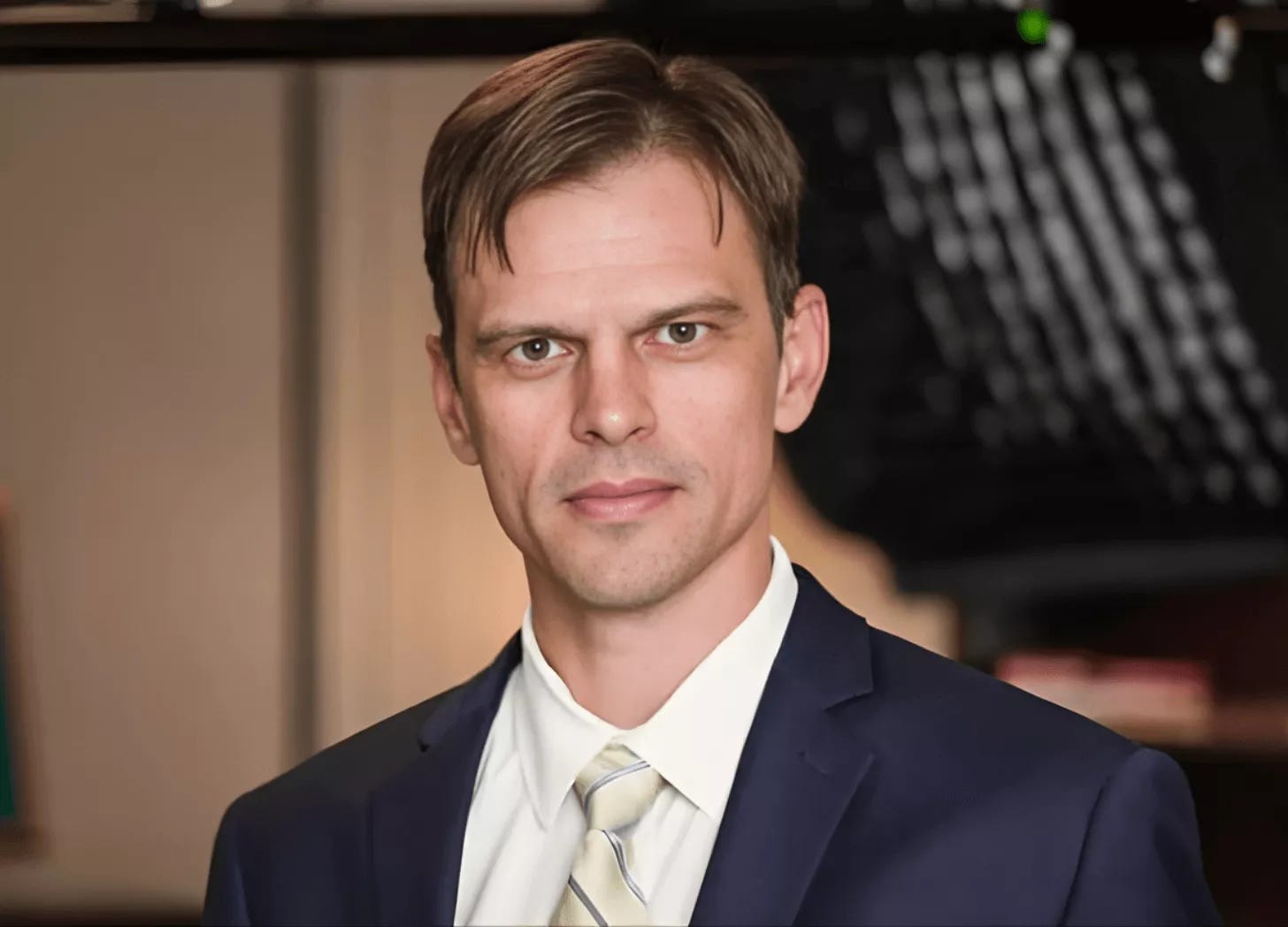
When Dr. Aaron Kheriaty walked into his lecture hall at UC Irvine’s School of Medicine each year, he taught future physicians the bedrock of medical ethics: informed consent and the moral courage to defend it. Ironically, those very principles would cost him his job.
Kheriaty was Professor of Psychiatry and Director of the Medical Ethics Program at UC Irvine, where he chaired the Ethics Committee. In 2021 he publicly opposed the university’s COVID vaccine mandate, arguing that it violated the foundational principle enshrined in the Nuremberg Code: that “adults of sound mind, after being given adequate information about risks, benefits and alternatives, have the right to accept or decline a proposed treatment or participation in a research study.”
Whether one supported or doubted the vaccines’ efficacy, Kheriaty insisted that coercion was unethical. He first tried to spark debate through an op-ed in the Wall Street Journal. When that failed, he filed a constitutional challenge in federal court. The university responded swiftly: first placing him on investigatory leave, then unpaid suspension, and finally firing him—expelling the very chair of its ethics committee for acting on the principles he taught.
It was surreal, he recalls. Yet the move from campus lecture halls to national debate proved providential. “I didn’t have a plan B,” he admits. “I just knew I couldn’t wake up with a clear conscience if I didn’t take action.”
From Courtroom to Lincoln Memorial
Weeks after being fired, Kheriaty found himself on the steps of the Lincoln Memorial in January 2022, facing a crowd of 40,000 shivering in the frigid air at the “Defeat the Mandates” rally. Beneath the plaque marking the spot of Martin Luther King Jr.’s I Have a Dream speech, he told his story of conscience and warned of the danger of medical coercion. “Only a few months earlier I never would have imagined being here,” he says. The next day he testified before a Senate committee chaired by Senator Ron Johnson alongside scientists and physicians exposing the harms of lockdowns, school closures, mask mandates, and coercive vaccine policies.
The public, he notes, was hungry for this: “People sensed something was wrong. You don’t have to be an epidemiologist to see the logical contradictions—like wearing a mask to walk to a restaurant table, then taking it off to eat.”
The Legal Battles
Kheriaty’s own vaccine-mandate case did not prevail—he was, as he puts it quoting Moneyball, “the first one through the wall, and the first one through gets bloody.” Months later, the Ninth Circuit ruled in a separate case that the century-old precedent Jacobson v. Massachusetts, often used to justify mandates, does not apply to COVID shots since they do not stop infection or transmission—exactly the argument Kheriaty had made.
But another fight gathered steam. Missouri v. Biden—now paired with Kennedy v. Biden—targets federal-government censorship. After the White House boasted of “good results” pressuring social-media platforms to remove “misinformation,” Kheriaty and colleagues, including Stanford’s Jay Bhattacharya and Harvard’s Martin Kulldorff, joined the lawsuit. Discovery revealed that federal agencies weren’t merely flagging posts—they were pushing platforms to alter algorithms and content-moderation policies, effectively censoring Americans “literally tens of millions of times.”
A federal judge called it “arguably the worst free speech violation in United States history.” Though the Supreme Court temporarily stayed the injunction on a technical question of standing, Robert F. Kennedy Jr.—explicitly named in government documents—filed a companion case. The injunction now stands in Kennedy v. Biden, and the Supreme Court is expected to rule on the merits.
What began as censorship over COVID policy turned out to be broader: government efforts to suppress speech on elections, monetary policy, foreign policy, abortion, gender ideology—“any contentious issue in American public life,” Kheriaty warns.
Life After the University
Paradoxically, life became richer. Supported by the Ethics and Public Policy Center and the Brownstone Institute, Kheriaty now runs a private psychiatry practice and writes prolifically: three books in three years, including The New Abnormal: The Rise of the Biomedical Security State and, most recently, Making the Cut: How to Heal Modern Medicine.
He helped found the Hippocratic Society, a new network of medical students and physicians seeking what he calls “a robust philosophy of medicine,” akin to the Federalist Society for law. Chapters are forming across the country for students “hungry for moral formation.”
He admits he misses daily mentoring of students and residents. But through podcasts, media appearances, and public speaking, he continues to teach—now to a much wider audience.
The Deeper Battle: Freedom of Conscience
Kheriaty sees the pandemic years as a case study in what Belgian psychologist Matthias Desmet calls mass formation: a “hypnotic state of fear” where people abandon reason and consent to illogical policies. “People became convinced none of the old rules apply,” he says. “If you dissented, you were labeled a conspiracy theorist.”
Breaking that spell requires the virtue of prudence—“a studied approach to understanding reality and acting with moral conviction,” as I reflected to him. And, he adds, the courage to know one’s non-negotiables. “Seek counsel. Pray. Know in advance what you will never allow yourself to be compelled to do.”
To illustrate, he points to two films:
A Man for All Seasons: St. Thomas More refuses to sign an oath he does not believe, even when silence isn’t enough, ultimately losing his life rather than speak falsely.
A Hidden Life: Austrian farmer Franz Jägerstätter refuses to swear loyalty to Hitler despite separation from his family, imprisonment, beatings, and ultimately execution.
“These men gave everything,” Kheriaty says. “Most of us will never face that kind of martyrdom, but we may face a ‘white martyrdom’: the loss of reputation, a job, unjust smears. We must be prepared.”
Lessons in Moral Courage
Kheriaty offers advice for anyone hesitant to speak the truth:
Discern with prudence: “You don’t have to fight every battle. But you must know your non-negotiables—lines you will not cross.”
Prepare your conscience: “Be ready for the moment when you are compelled to say or do something you know is wrong. Decide in advance where you will plant your stake.”
Seek examples of courage: He recommends two films—A Man for All Seasons (St. Thomas More) and A Hidden Life (Franz Jägerstätter)—each about men who refused to give false witness even at the cost of their lives.
One scene in A Hidden Life especially moved him:
“The prison guard says, ‘Just sign the oath and you’ll be free.’
Franz, beaten and bloodied, replies: ‘But I already am free.’”
Kheriaty reflects: “That’s interior freedom—something no one can take from you.”
My Reflection
Plato wrote that philosophy is a preparation for death. Dr. Kheriaty’s witness reminds us that the preparation begins not in some distant crisis, but in the daily resolve never to betray conscience—whether in the public square or the quiet privacy of our own hearts.
We may never stand on the steps of the Lincoln Memorial or argue before the Supreme Court, but like Thomas More and Franz Jägerstätter, we can live in such a way that, when the test comes, we too can say with unshakable peace: “I already am free.”
👉 Ready to go deeper? Listen to the full conversation with Aaron Kheriaty, MD on Virtuous Leaders with Dr. Johann D’Souza, Episode 25
👉 Don’t forget to share this with one friend who needs courage today.